In Pethor, a prophet, known as Balaam, received some unexpected guests. The messengers brought news of a people who’d come out of Egypt. The king of Moabites had sent these messengers to ask Balaam to curse these people. Confused, but willing, Balaam calls the messengers in so he can ponder on the matter.
That evening, God spoke to Balaam, informing him he had blessed those people, and he should not curse them. The next morning, he sent the messengers away. The king wasn’t thrilled with these results, so he sent princes back with an offer of great riches. On their arrival, Balaam again allowed them to stay the night so he could ponder the proposition. The Lord came to Balaam this time saying if the men come to him again to go with them. Seeing this as permission to accept the money, Balaam saddles up his donkey and rides to the King.
Along the road, an angel waits to intercept Balaam, who had been a little too enthusiastic with his travel to curse the people. The donkey, seeing an angel waiting for them, runs to the field. Balaam, angry at his animal, forces it back to the path. It’s not long before the donkey again sees the angel in their path. With nowhere to run, it smashes Balaam’s foot into the nearby cliffside. Exhausted from the disobedience, Balaam smacks the donkey, pressing it forward. For a final time, the donkey sees the angel and stops refusing to move forward. Balaam, no longer able to contain himself, smacks his donkey with a rod.
Just as his situation couldn’t get any worse, Balaam’s donkey looks up at him and speaks. Suddenly, Balaam finds himself arguing with a creature he’d seen as simple. In the next moments, his eyes would be opened, and he would see the angel standing with a sword waiting to end his life had his faithful donkey not avoided moving forward.
This is a strange tale that I’ve always found fun to read. A donkey speaking to save a man from death. It doesn’t help that the King James version of the Bible uses the more crass version of donkey. That only makes the story more hilarious. Yet as I started thinking about donkeys and their placement in the Bible, this tale took on a new meaning.
The Hebrew text has at least four different words for donkeys. Chamor, an adult male. Athon, an adult female donkey. Ayir, a foal or a young donkey. It also specifies wild donkeys as well. This, to me, especially in a story such as Balaams, means there’s a symbolism behind the specific type of donkey.
One very power symbolism is the prophecy in Zechariah 9:9.
“Rejoice greatly, O daughter of Zion; shout, O daughter of Jerusalem: behold, thy King cometh unto thee: he is just, and having salvation; lowly, and riding upon an ass, and upon a colt the foal of an ass.”
This scripture uses both the adult male and the foal version of the word for donkey. The adult male represents humility. It doesn’t have the same conquering tone that riding in on a horse has. The male can also represent materialism and human nature. The messiah riding in could signify His overcoming of the natural man and mastery of the material world.
This symbolism is even more powerful with Christ’s literal riding of a colt into Jerusalem. A colt is unburdened, untamed. They’re a symbol of a fresh start, a potential yet to be unlocked. The mention of a colt emphasizes Christ’s humble and peaceful arrival, not on a warhorse, but on an untamed young animal. It was a symbol of a new kind of Kingdom, one of peace and humility.
When we take this deep symbolism of Christ’s donkey and return to Balaam, his story changes. The female donkey is seen as more docile and patient. This makes her a reliable companion. In this story we have Balaam going against the will of God in hopes of gaining riches of the world, it is not until his humble and reliable companion finally convinces him of his mistake he can see the angel of God waiting for him.
This is not a story about a man and his donkey. It’s a story about a man of God who’s fighting his own humility and reliability to God. Balaam knows he has chosen the wrong path, and it is not until he heeds the more humble part of his soul that he again sees the path God has in store for him.
Don’t we do the same thing? How often do we punish ourselves for being humble? We asked why we should allow our humility to stop us from a great opportunity. It’s easy to fault Balaam for being so easily swayed by the riches of the world, but today, we’re swayed for much less. When we find ourselves walking down the fateful path to Moab heed the donkey, heed humility.
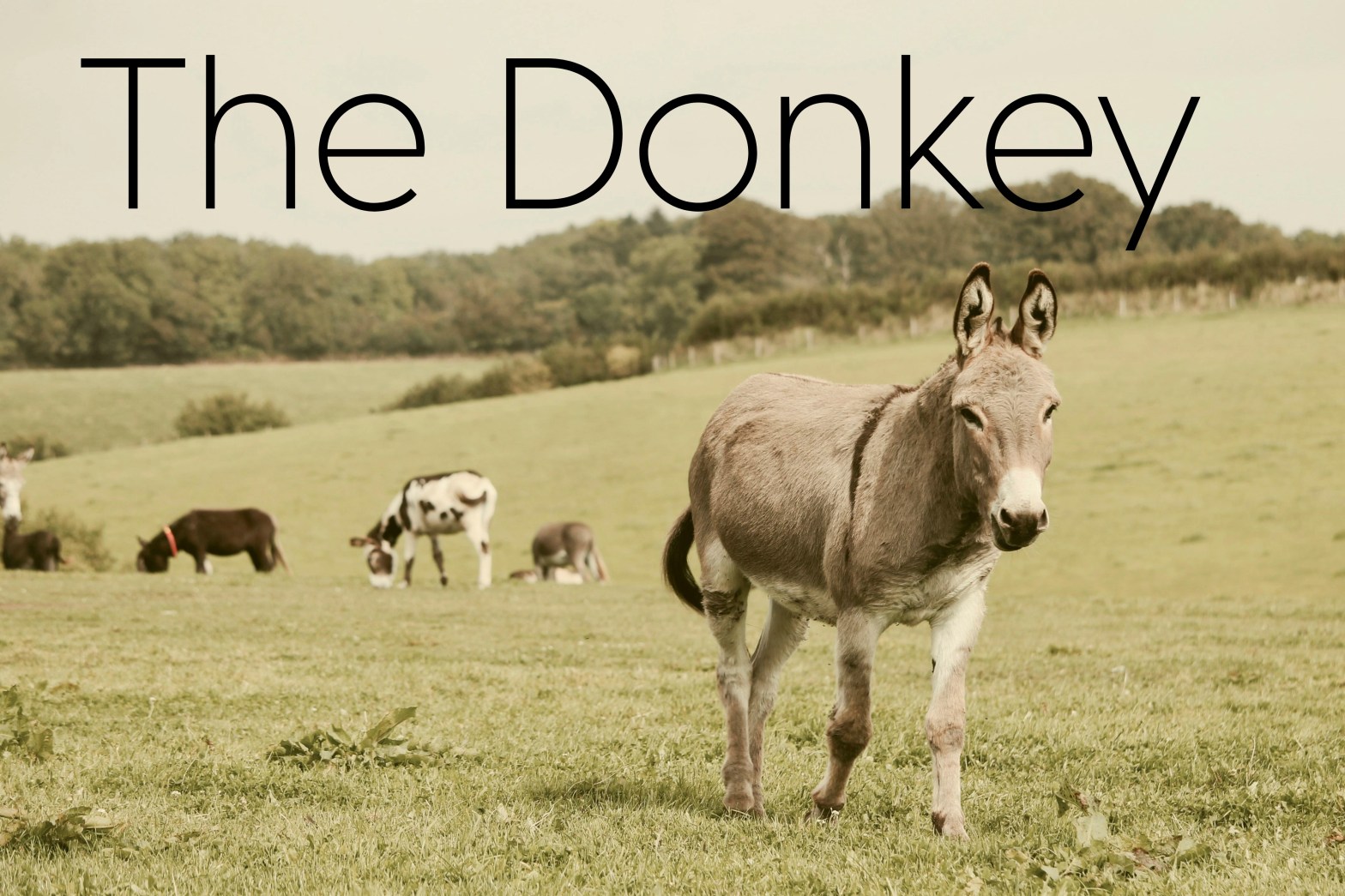
The Donkey
 Jacob Gittins