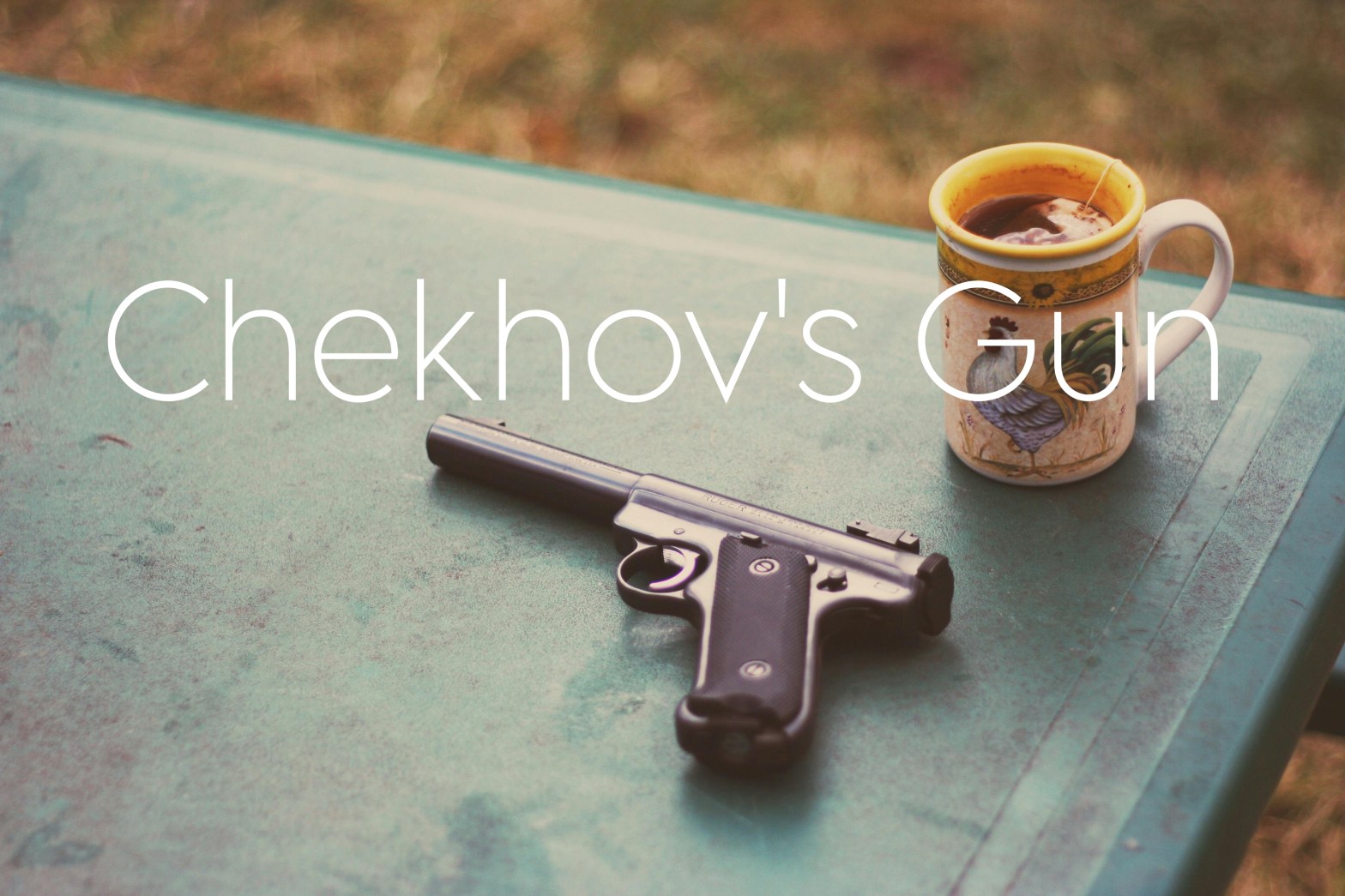
“If in the first act you have hung a pistol on the wall, then in the following one, it should be fired. Otherwise, don’t put it there”
Anton Chekhov
Writing a story is an incredibly fun activity. You get to create a whole world from nothing. You have a million things to reference and nothing to restrict you beyond your own imagination. Your world can have your beliefs or beliefs that don’t even exist. Despite the freedom, there are nuances that exist within the fiction world that create fictitious restrictions on one’s imagination.
Writing was Minecraft for me. When I was young, I wanted to create the most life-like video game. A game where every decision made a different character, where you could almost never experience the game the same way twice. I realized that what I wanted to do was create my own world of fiction. Writing wasn’t always easy. How do you describe a creature that doesn’t exist in the real world without referencing something in the real world, because in your story, that is the real world. I think Tolkien did a great job when he introduced the idea that his story was of ancient England. This tied his characters to our reality, making it easy to bring the two worlds together.
That became my new barrier as a kid. The world was my oyster, as long as I could describe the oyster. For years, I’ve thought about how to make an audience feel words. I studied how people wrote descriptively. I read back my own words, seeing if I could taste the rainfall or feel the icy wind whipping past. For a time, I even felt like I was getting quite good at it. In fact, I know there’s such a thing as regression because sometimes I’m taken more in by how I used to write than how my words come across now.
Mastering a descriptive language is a great skill, but another one eluded me. Object importance. I would write about a sword, describing its shining jewels, the glimmering silver, cool to the touch. Its blade engraved with ancient text no one could decipher. Four chapters later, the sword is gone. It took a lot of time for me to start listing items of importance. Then, my mind became caught up in this quote above. Every item suddenly became important. If I mentioned an unusual feature, suddenly it meant something deeper. If my character caught a glimpse at the hilt of a sword, that sword had deeper meaning. I became almost obsessed with each item, meaning something.
That’s when, interestingly enough, I stumbled upon a Quentin Tarantino interview. He spoke about how including details that allow an audience to think, “hmm I wonder what that’s from” gave a deeper meaning to his stories. So now when I see this quote above, my mind always counters it.
I place the importance of each item in the middle. I don’t believe a story is incomplete if an item doesn’t fulfill its purpose within the story. Sometimes, a sword is just a sword. A book is just a book. As a story writer, I get the extra ability to have meaning behind it that I know that isn’t expressed in the story itself. For instance, I try to come up with a detailed back story to each of my characters. Some have their life before the story alluded to others, and you don’t get any reference to their past. Sometimes heritage exists that links to great leaders, but the character with the heritage plays a little role.
The reality is that nuances are only that, nuances. Just because something works for the masses doesn’t mean it will work for you. Just because something doesn’t work for the masses doesn’t mean it won’t work for you. Some of the greatest stories of our lifetime haven’t followed the structures of their time, yet we loved it, and our love made it great. So stay creative, stay imaginative, don’t let the advice of success restrict your own story. Your story can be great they way you want to tell it.
Chekhov’s Gun
 Jacob Gittins