The slowly building Eastern wind
The saying hi to forgotten friend
The making turns when others bend
The soft sorry to make amends
The seed the grows into a tree
The soft reminder you are seen
The question asking where you’ve been
The sticking through when you are mean.
The ripple that turns into wave
The holding in so you behave
The silly secrets, don’t you cave
The little child came to save
The snuggle in the morning breeze
The getting dressed with so much ease
The blessings from that time you sneezed
The little wants try to appease
The saying yes, but feeling no
The feelings in we try to show
The want to stay but need to go
The being kind despite a foe
The village where nobodies from
The fish and bread, to me here come
The unforgiven men the sum
The sacrifice for peace now done
The boy found teaching greater things
The man whose father built great things
The man who sought from lesser things
To turn them all to greater things.
The slowly building summer wind
Increases when we meet a friend
Turn towards them, when they bend
Let kindness be the mutual mend.
The Crux
Honestly, life would be easier without writing. There are so many things I could do with my time that would be relaxing and less mentally taxing. I wouldn’t have to feel this aching guilt at the back of my mind reminding me I’ve failed to complete my quota for the week. I won’t hear that “you missed Sunday” in the back of my head. Yet, I do, and it has nothing to do with writing being a requirement or a task to be completed.
Today I was mowing the lawn, as you do, and while I was mowing I was thinking, as you do. I was pretty frustrated with myself for missing out on doing a Sunday post, but that wasn’t my primary thought. You see, for many weeks, as I’ve been less consistent with my blogs, the thought has crossed my mind on how much writing might be taking away from my daily life. Am I missing out on other joyful things because of the desire to write?
This was the thought that crept up mid mowing. Did I need to be angry with my lack of ability to write or can I just let it go? My answer was so simple it was kind of annoying.
I love to write. I wasn’t annoyed with not keeping to a schedule. I was annoyed that I didn’t get to spend some time with an idea. My Sunday sessions usually start with some random obscure idea I get to dig into and then write my thoughts about. I get a lot of joy out of those Sunday sessions. I didn’t realize how much joy until mowing the lawn.
Annoyed wouldn’t be the right word. I longed for writing. We’ve had a bit of craziness because my wife lost her phone and we needed a replacement and I found myself running around town trying to replace it. That was important. This is probably a bit of a problem, but here it goes, I have a bit of an addiction to immediate contact with my wife. I don’t need her to text me right back or answer all my calls, but the idea that she can’t give me a bit of anxiety. An example is being at the store getting her a phone, with every delay I thought, “let me just text her and let her know”, followed immediately by the realization I could not.
This is a similar feeling that I had with missing my Sunday blog, if you can believe it. It wasn’t that it’s a requirement by any means of the word, just like my wife isn’t required to have a phone at all times. It’s the thought that I want that connection however unused it is. I like being connected to my wife at all times, I also like being connected with my writing and for me the Sunday blog is a major part of that connection.
A weird parallel for a weird week.
Hiatus

I never meant to have such a large gap between blogs. I knew things were going to get more difficult to keep up a daily regiment as I had done for a month (super proud of by the way), but the hope was to have some sort of daily interaction with the blog. I was thinking quotes, poems, and short thoughts mingled with extended blog posts. The fact is, life happens and sometimes depression.
These last few weeks have been a mangled mix of emotions. I took my wife and kids to visit family on the other side of the country. It was really nice to see family for a short time, but my time was shorter than the rest. I had a sixteen hour drive back home leaving my wife, kids, and dog in Utah. If you’ve followed the blog you may have read Country Music. This “poem”, constructed more like song lyrics, was inspired by the drastically different car ride from driving with my family to driving alone. In a lot of regards the freedom of gas being your only restriction is nice, but the freedoms were not worth the trade.
Walking into an empty house is surprisingly hard. I have never lived in my house without my family and the quiet was daunting. You don’t realize how much those surrounding you inspire you, until they’re gone. I had all this time for writing and no inspiration. Even my Jesus and Rome posts, which took a lot of focus, were extra challenging.
The entire two weeks I found myself fulfilling random chores just to keep my mind off of the emptiness. Everytime I thought to sit down and write my mind would be reminded of the emptiness. I don’t know how many times I wrote while they were gone, but their arrival home didn’t leave me much ability either. That same week we had carpet and flooring replaced with the task of moving furniture from room to room.
All of this is just a long winded way to say, I have some other projects I’m working on that may make blog writing thinner than before. I like writing poems and looking up inspirational quotes. While that was typically meant to fill a day to keep up a daily post, it may be more of a weekly thing as I focus on some other projects. My post on Jesus and Rome really inspired me. The study involved brought up a lot of ideas that I couldn’t contain within a weekly blog. I thought I might write even more on the subject, but that is to be seen.
Morning Inspiration
“Forever is composed of today”
-Emily Dickinson
What You Can See
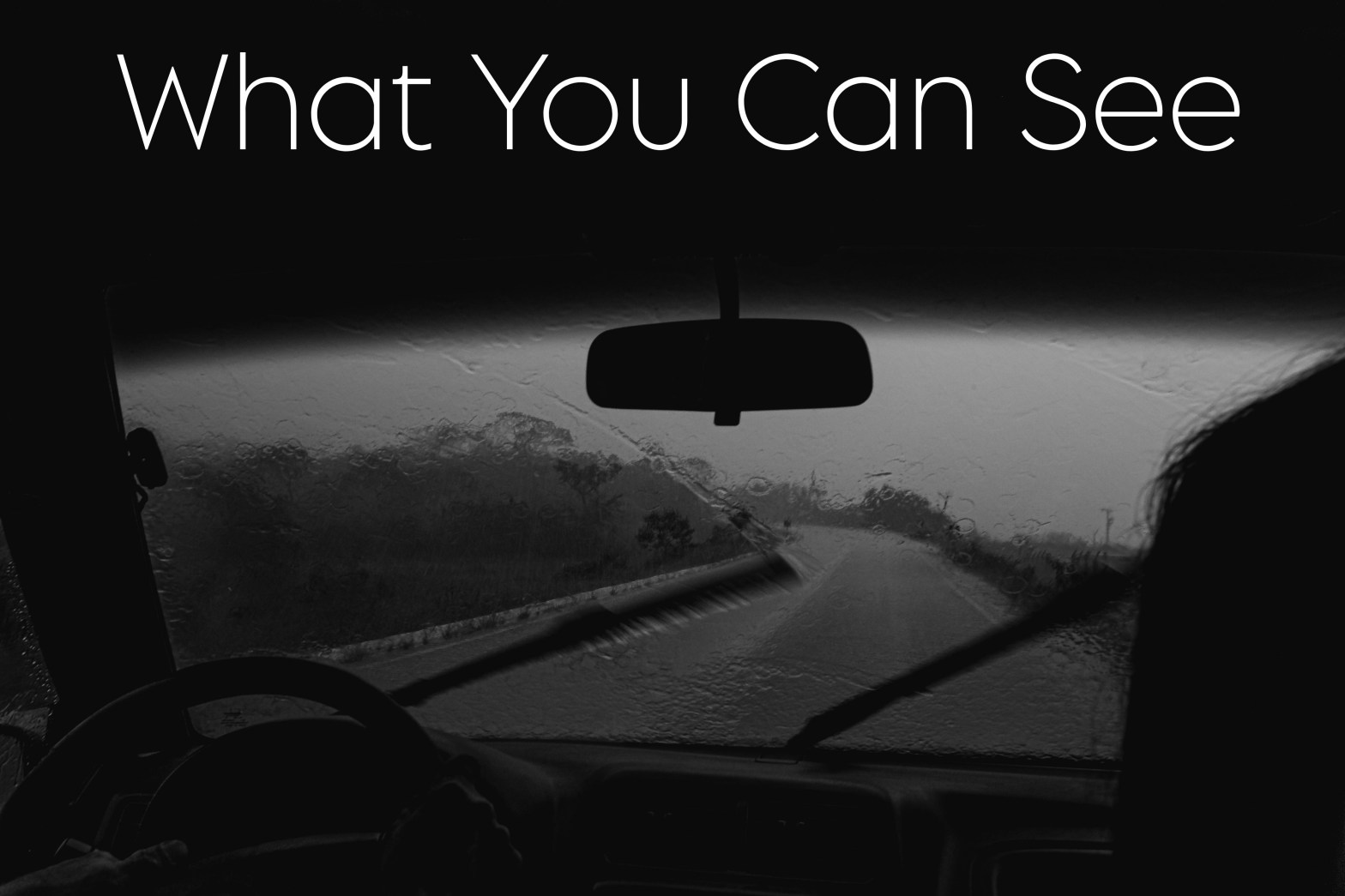
A curve in the road
A stop sign, so bright
Things that I see that command my own might
When curves come, I turn
The stop sign, just fight
The urge that I have to roll through at night
But long on the road
When water falls down
The curves disappear, and the lights are all drown.
The droplets get thrust
As the wipers push hard
To keep all the water from collecting too far.
Yet thrust after thrust
The water still builds
Oncoming headlights blur my windshield.
I squint with my eye
I turned to the side
To see what that bright new headlight tries to hide.
I slow down my pace
I look down real close
Ten feet ahead is the most that I know.
Suddenly, sparks fly inside of my head
I realize I’m looking much too far ahead.
I don’t need to know what’s behind that light.
I just need to know what’s right there in sight.
The road behind blur won’t do me much good,
But lines in my sight keep me safe from the wood.
A message that rang like a bell in my ear
To drive’s not the only time lesson is dear
In life, we keep peaking to see what’s behind
The blur of life rain, always shaking the mind.
We forget to keep eyes on the lines that we see
To turn us right now, keep us safe as can be.
So squinting must stop
No more turning head
Keep eyes on what you can see now instead.
Rome and Jesus: Part 3

The Christians
What was a Christian in the beginning? Followers of Christ believed he was the Messiah they’d been looking for their entire lives, not a new god. The followers of Christ were Jewish and believed they had received the gospel as it had originally been delivered to their Jewish ancestors. It was the Gentiles that called them Christian. They were a new group of Jews, a group that had to be distinguished from the others. They were jews that believed in Jesus, Nazarenes. Christian was not what they called themselves.
The beginning of the Christian path was rocky. To start, they had lost their Savior to the cross, a moment both filled with great reverence and utmost grief. Yet this horrible fate lasted for just a moment as in three days he was risen from the grave. His disciples saw him and witnessed his truth, but even then, when Christ left them, they were not sure what path they should take.
The Bible recounts a very interesting moment that really tells the attitude of Christ followers after his death. After Jesus had appeared to them, Peter, the rock, is spending some time with other disciples and says to them “I go a fishing”. After all, it was finished. Christ had fulfilled his mission on earth. It was a spiritual one, not a physical one, and it was done. Why not go back to what was good before. That moment brings us back to the mindset of the earliest of Christians, the mindset that Christ had won the good fight, and all we are left to do is enjoy it.
While on the sea, a very familiar moment happens. A man appears on the shore after an unsuccessful bout of fishing. He tells them to cast their nets and an abundance of fish, too great to carry and fill their nets. For Peter and John, that was all they needed. Peter ran from his boat to greet Jesus. That afternoon, they ate fish on the shore, and the start of the Christian passion began with a simple question. Lowest thou me more than these?
That simple question was a spark in what Christ intended for his followers. It was the spark that turned Peter into the rock he was meant to be for the Gospel Christ had given. It was the spark that would push them through tribulation we can not even comprehend in our day.
Peter became a rock and taught boldly the Gospel of Jesus Christ. He was imprisoned by the jewish leaders because of his teaching. This was after the death of his close friend and fellow believers, James, the brother of John. King Herod Aggripa I found James death had pleased the Jewish leaders and felt imprisoning Peter would please them as well.
This was the start of persecution. In the following years, nearly all twelve men who walked with Christ would find themselves crucified, beheaded, or killed by some other means. Only a few skirt through history with a chance of a peaceful death with John being the only one without a gruesome possibility. They had been labeled Christians, followers of Christ. A term given to them by the Gentiles. A term Peter declared,
“Yet if any man suffer as a Christian, let him not be ashamed; but let him glorify God on this behalf.”
Don’t be offended, glory to God no matter what we are called. A name that would be used to distinguish them from their jewish brethren and make persecution more precise.
New leaders rose in Rome. They declared themselves god, but Christians would not bend the knee to these human gods. The nation that had, for the most part, ignored this new rising religion now had people refusing them because of that belief. A persecution that had been led by the jews had now become a Roman problem.
The first step of persecution was simple. They outlawed Christianity. They did not seek out Christians. In fact, they discouraged people from trying to accuse their neighbor of being Christian. Christianity was simply illegal, and if you did not renounce it, your punishment was death. A harsh rule, with less enforcement in its infancy. Rome wasn’t out to kill the Christians in the beginning. They wanted to turn people away from it. It had grown so rapidly that the only prevention was the threat of death.
This quickly evolved. Worship of the Roman gods prevented famine and sickness among the people, or so they believed. So when these things plagued the city, who was to be blamed. The Christians who didn’t worship the Roman gods. Christians were reliant on local leaders and public opinions to keep living their faith, but as these events turned the public against them, leaders moved against them as well. What was simple a rule for containment became a tool of persecution. Roman leaders began encouraging persecution.
In 250 CE, these persecution came to a head with the widespread edict requiring all people to perform a public sacrifice to the Roman gods. After which, each citizen would receive a certificate verifying their completion of the ritual. For the first time, Christians would be forced to reveal themselves or deny their God. What was a possibility for some became a reality for all.
For the next 60 years, the Christians were treated like vermin. Rome seemed to try every means imaginable to discourage them, torture, exile, and kill as many as possible. Clergy were forced to sacrifice under threat of torture, churches were destroyed, and scriptures burned. By all measures, this should have been the end of Christianity. Yet, the same man who was the harshest opposer of the movement admitted it could not be stopped and issued tolerance.
It reminds me of the words of Gamaliel, who said,
“And now I say unto you, Refrain from these men, and let them alone: for if this counsel or this work be of men, it will come to nought: But if it be of God, ye cannot overthrow it; lest haply ye be found even to fight against God.”
A year after the edict of tolerance, a leader of Rome would have a vision. This vision would cause a shift. A shift that would take a nation that fought so hard against Christians to a nation led by Christians.
Gardening
To the garden I gleefully go
Harvest is here what’s there to show
An apple tree plump as you know
Zucchini thick run to and fro
Carrots plenty fill the dirt
Cucumber, pumpkin, strawberry dessert
Corn in its stalks, a prickly hurt
As thorns from the roses grab hold of my shirt.
My baskets are filled, my fingers now numb
From pulling and pulling the art of green thumb
But, what’s that, I ask, to myself feeling dumb
Another small plant hid beneath rotten plum
Its nothing I’ve planted, it must be a weed
I guess I must pull it to save other seed
But hands reaching down, fingers did not agree
Instead found myself laying under the tree
“It can wait til tomorrow” I say in my head
One small weed won’t make all my other plants dead.
So I clean up my hands, fingers blistered and red
Then take to my room and drop hard on bed.
The morning a cockatoo bellows aloud
I take to the kitchen where my vegetables crowd.
With cutting board, knife, and hunger abound
I make a good meal, store the rest all around.
In cupboards and fridge, overflowing with fruit
On the table three type of vegetable root
Dust from their cleaning now covers my boot
Making all of my sweeping a point that’s now moot
When I finally put those shoes in the garage
I walk out to sunset, at the garden I pause
The plants still sit happy I give them a nod,
Then see the green weed like a horrid mirage
Again I reach out, but the sun’s getting low
“I guess I can wait till tomorrow” I go
Its only a small weed its no hefty foe
Early tomorrow I’ll pull it, I know.
Then morning and morning went past every day.
Chores filled to the brim making me always say
“I’ll do it tomorrow” in different ways
From committed salute to casual ending of day.
While I rested and worked the weed simply thrived.
Till it fought with the tree to keep staying alive
Its roots dug deep, feet at least five
Its base was bigger than four large beehives.
I woke up so startled to see such a sight
And yet, watched it grow from just a small sprite
I run to the base and prepare for a fight
While I pull and I pull using all of my might
Not even a budge, does the weed end up moving.
I smack my own head knowing that I am losing
I grab a sharp shovel the base I’m perusing.
To see how to take this big weed from its musing
I hit and I smack, I pull and I axe
It’s not going anywhere, that the facts
It’s not just the muscle that my arm lacks
But help from another to get some new tacts.
One friend comes across the road to with his shoes
Surprised as could be when he saw the big view
He calls another, and another two.
And soon we are more than just a small few.
Together we pull, we axe, and we tare
The weed fights real strong, its roots thick, they bare
But after we shovel, dirt piled in the air
The weed let’s ground go, together we stare.
So never forget, when your harvesting dear,
A weed may seem but small interfere
But left there for too long becomes quite severe
Alone you can’t pull it, so keep your friends near.
That’s Not Important
Writing a story is just plain fun. It’s fun to sit down and write all the different little aspects and intricacies about the histories of characters, the creation of castles, and civilization. One of the things that really intrigued me about The Lord of the Rings was the Silmarilian, the deep theological journey J. R. R. Tolkien took himself through in order to really dig deep into what that’s actually going on in his world. That journey created an enriching depth to his books, but at the same point, it wasn’t important.
When you look at The Hobbit, or The Lord of the Rings trilogy, the deep theological truths behind the story don’t play a crucial role. Sure, there are mentions of historical events and characters, but nothing that forces a reader to go back and investigate to understand. An example is Aragon. His race comes from the brother of Elrond, who chose to die, rather than live forever like the elves. This accounts for his old age and the separation between him and Boriamir. That’s all the explanation you need to understand his life length as well as the difference between him and men. Yet the story of Elrond and his brother is extensive.
So theology, when it comes to writing a book, isn’t important unless it is. There are so many books that only have the story itself written and slight details about history needed. What I find really fun for myself is writing about theological depth and myths. What role do they play in my characters’ lives? Is there a higher power allowing my character to come across good luck? I even specified a portion of my website to include different conclusions of the world creation based on different sects.
The truth is I keep calling it theology, but in reality, it’s history. It’s the actual history of how my world was created. I wrote a lot about this is the blog intricacies of theology. This is more focused on the fact that it’s just fun to make stuff up. It’s weird to bind yourself to rules based on historical facts, yet the generalized creativity is freeing. You can write about whatever you want as little or as detailed as you want because it’s not a book. It’s just history.
That’s the fun of it. Writing is about being as creative as possible. It’s about building a path for readers to enter your world. It’s about building a world they want to stay in. C.S.Lewis got right with the Chronicles of Narnia. A world in a wardrobe where all your imaginations come true.
Monday Quote

“You only live once, but if you do it right, once is enough.”
-Mae West
 Jacob Gittins