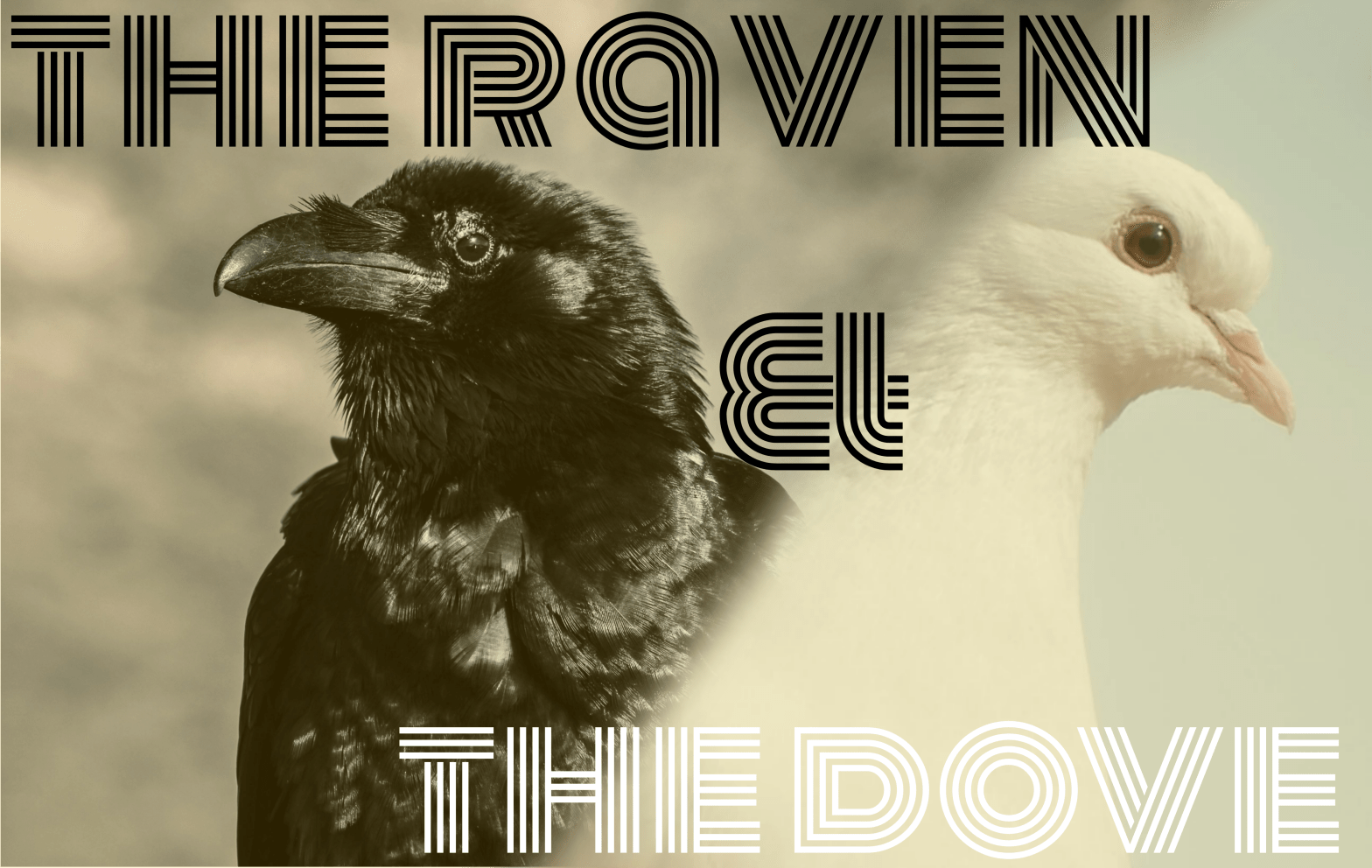
After many days inside the ark, Noah looked out and started to see the tops of mountains. It was the first sight of land in over 150 days. Thrilled, Noah sent a Raven out. The bird traveled the land, never returning to report its discoveries. Afterwards, Noah sent a Dove, who returned after having found nowhere to refuge. Eventually, that same dove was sent out again, this time returning with an olive branch. On his third expedition, the dove found a place to call home and didn’t return again.
Ravens have an interesting role in biblical history. The raven is released by Noah to see the desolation of the land. In Elijah’s day, ravens were sent to him to keep him nourished during a time of famine. Christ used ravens as an example of the lowest creatures being taken care of by God.
“Consider the ravens: for they neither sow nor reap; which neither have storehouse nor barn; and God feedeth them: how much more are ye better than the fowls?”
Ravens have mixed symbolism. They can represent wisdom, knowledge, transformation, and death. Biblically, they are seen as unclean and symbolize God’s ability to use unclean vessels to fulfill His righteous works. This is represented by their feeding of Elijah, the prophet. Yet, in other cultures, they are seen as delivering heavenly messages. I can’t help wonder if Noah, growing up in a culture with many beliefs, chose a raven so if anyone was still out there they would see the raven as a message God had fulfilled his word. Furthermore, the raven not returning to Noah could be the reason it status among the jews became so low.
The dove is seen universally as a symbol of peace, purity, hope, and new beginnings. Not only was it the one to pioneer Noah to the world again, it also represented the Spirit of God at Christ’s baptism.
“I saw the Spirit descending from heaven like a dove,”
In none a non-Christian format doves represent love, fertility, and the feminine aspects of the Divine. It’s interesting because I have always seen the spirit as the most motherly of the God head. It’s the Spirit that speaks peace to each soul. The Spirit is a still small voice of comfort.
“But the Comforter, which is the Holy Ghost, whom the Father will send in my name, he shall teach you all things, and bring all things to your remembrance, whatsoever I have said unto you. Peace I leave with you, my peace I give unto you: not as the world giveth, give I unto you. Let not your heart be troubled, neither let it be afraid.”
The raven is a lot like the prodigal son. You could say the prodigal son left his father’s house and went to and fro until the lands were all dried up. The dove is symbolic of the loving father who welcomed the son back, allowing him to live the rest of his days in peace. We are all of us doves and ravens. God has sent us out of the protection of his ark to brave the world. Some of us return often, others travel too and fro. All of us have an ark ready for our return, and no matter who we are, we are welcome home.
Annoyingly Prepared

I woke up this morning to the natural chaos of children and a puppy. Lately, I’ve been trying to be more active in the morning, so I immediately prepare to take the dog on a walk. I note my wife saying it’s still raining outside, and I grab a coat to prepare for the weather. When I look outside, I see evidence of rainfall, but nothing is currently falling from the sky. For a second I think, “maybe I should put this coat back,” followed quickly by the thought, “if I want to walk far and it starts raining I won’t want to get caught without it.” So I throw my coat on and step outside into the humid air.
Being prepared is important. It can be the difference of finding yourself stuck hiding beneath a tree till the rain stops and walking home through the storm. In my line of work, it’s crucial to stay ten steps ahead of what’s actually going on at the moment. By staying ahead, when things blow up, you have a solid buffer that allows you to keep your head above water. This could be the difference between immense stress and a stressless day.
Being prepared is not always easy, though. Like this morning. The coat meant to protect me from the storm got really hot. I took it off and tied it around my waist, but then it constantly slipped off because of the same material used to protect me from the rain. At work, it can be tedious making note of every possibility, but it’s even worse if you get caught unprepared.
Being prepared means carrying around an uncomfortable coat, not because it’s going to rain, but because it could. It means reading the book and knowing all the rules, so when that rare situation arises, you know what to do. It’s not always the fun thing. Sometimes, it can be downright annoying, but nothing’s more annoying than getting caught unprepared and walking home soaked.
Paradox

I think I’ve had a lot of blogs about my blog. That fact is, I don’t really know how a blog works. It’s not like a journal. I’m not writing all the deep, dark secrets of my soul. It is a little personal, though. I express thoughts I don’t generally talk about to anyone. How often has been a major question in the matter. Do I write daily, just a few times a week, or whenever I want?
Writing in a blog is like a casual Friday. There’s still a hint of presentation present in your words. You know someone could eventually read what you’ve written, but you’re also not running as tight a ship as writing an article. A journal is definitely more like walking around naked in your house. I think blogs can sometimes go that far, but most people don’t come to a blog for that much exposure.
So far, I’ve honestly treated this blog as a more paranoid casual Friday. I know I don’t need slacks and a button-up shirt, but I overthink the t-shirt and wonder if I should go shorts or jeans. I think too hard about what someone might want to read rather than just writing. Some might not think that, but just like my causal clothes might not jive with everyone, my writing won’t either. No matter how much thought I put into it.
I set a schedule for myself recently. I write one blog for Wednesday, just something general. I then write a Sunday blog, usually religiously themed. It was a good idea, I thought, until I really thought about what a blog is. A blog should just be random thoughts, right? I shouldn’t be structuring it to two days a week, I should feel free to write as much or as little as I want. I don’t want to write too little, though, because I don’t want people to lose interest or disappoint someone who might enjoy hearing the blog.
It’s all a crazy mess of should I, shouldn’t I; how much, how little?
Ultimately, writing because I have to write is not the purpose of my blog. I will write though, because I want to write, maybe more than I want to write, so I continue to write. Now you know why I called it Paradox.
Every Moment
My writing comes from the deepest places in my mind. Somewhere down the line in my life, I found saying words was much harder than writing them. Hence, my blog. That’s even trickled into my marriage. I often feel like I can better express myself through writing rather than trying to say the words out loud. Needless to say, my wife has caught onto this trend. Each time I write, she takes a moment to investigate my words, searching for deeper meaning.
This led to the moment today where she told me to write. She said it in response to my last blog. Somewhere, I had pointed out the lack of time for writing. It is nice to be able to sit down and write, feeling some sort of designated time frame for it. I used to wake up early every morning, before my son was born, to write my book. The challenge has never been having time to write, but choosing to write.
I think designating time to something is especially important these days. If you grew up before the ever distracting waterfall of media, you’ve probably built up habits that lead to a focus effort on things you love. If you grew up with that media waterfall, you’ve likely been caught up in the curling wake at the bottom, often tossing yourself in doomscrolling or following pointless stories for entertainment. There’s always a sport to catch up on, a video game to play, a movie you have to see. It all adds up. There’s so much of it, and it’s so easy to get caught in. Time to do things that take even the slightest bit of extra effort seems burdening.
It’s not that you don’t want to do it. My wife is the same way with decor. She loves getting it, taking and editing pictures, decorating, and even selling it to someone who can really love it. Yet it takes work, and when you’ve spent an entire day doing work that has to get done, it’s hard to choose more work no matter how much you enjoy it. So you’re left doomscrolling, telling yourself, one more, until suddenly it’s midnight and if you don’t go to bed you’ll be too tired for the necessities in the morning.
That is what inspired my poem. Time is always moving, and what we do with it, we can’t get back. Once we’ve used it, it is gone, yet its effects weigh on us. What we do with time affects who we are, what we are, and how we are. It can age us like wine or spoil us like milk. It’s so easily disposed, and yet the most precious gift we’ve been given.
The Uselessness of Yesterday
Time is such a fickle thing
It sways
It moves
It ever sings
It’s always new and never old
Yet more of it can make you bold
You somehow have it all the time
Yet not
It goes
Fast as the rhyme
It sits upon you like a weight
But still it drifts with every date
You have it all, but still have none
You wake
You work
You always run.
It ages you but stays away
It’s useless used so stay awake
If you fail to take your time
It sways
It moves
It says goodbye
You’ll find tomorrow here today
The uselessness of Yesterday.
The Worth Of Souls
Probably the most misunderstood figure in the life of Jesus Christ is the Apostle Judas. He walked with Christ, saw His miracles, felt His majesty, and yet, at the end, betrayed Him. How could one who walks with God turn against Him? People argue he had a different vision of the journey Christ was meant to take. Others see him as the wolf in sheep’s clothes, waiting among the disciples to betray the Christ. When I look at Judas, I see a struggle between good and evil. An epic battle for his soul.
Christ knew his mission and, based on scripture, had some detailed knowledge of how everything would play out. He may not have known Judas’ final fate in the beginning, but Judas was called either way. The Lord never called a soul to Him without a path to a greater good. No matter what Christ knew of Judas’ fate, He called Judas because He desired to bless his life. In scripture, there is clear bias against the man who betrayed the Lord, and perhaps it is all warranted, but I believe the Lord called a soul with the same flaws as Peter and Saul.
We often look over the depth of Peter’s betrayal when Christ is taken. The man who swore to stand at Jesus’ side to the end ran in fear, realizing Jesus did not intend on fighting his captures. To seal the betrayal, he is asked on multiple occasions if he knew Jesus, and he denied it. This is only hours after the Lord predicts this, to which Peter swore it could not be so. Why do we overlook this betrayal? Because Peter repented.
Peter was not the only Apostle to betray the Lord that evening. Not a single man stood with Christ as he was taken to be judged. When the people called for Christ’s death, not one apostle is noted to shout a rebutle. Of the twelve that walked with God, none stood with Him at His most desperate sacrifice.
This moment was the most important moment in human history, but there was one barrier that stood between Christ and the cross. The betrayal of Judas. Had he chosen to turn back to Jesus that night and stayed among his friends, the Savior would not have died. Without this very betrayal, the most power sacrifice to be made would not have been made. How could Judas not have betrayed Jesus with the fate of redemption resting in the choice. What a truly sacred role Judas played in the Atonement of Christ.
The spirit can not tempt Judas to do evil, but it can leave him and allow the devil to tempt him. With an absent spirit, it was easy for the devil to work on Judas’ pride and lead him to believe he knew what was best. Here is the worth of a soul. The devil knows the Savior. It is evident in the way the corrupt spirits spoke to Christ in His ministry. This means the devil knew of the importance of what was about to happen, but despite the great disturbance this would cause to his own plans, Judas soul was worth the risk. Judas, the betrayer, soul was worth that to the devil. If that is so, how much more important was his soul to Christ.
Judas soul was important to Christ. If we could turn back time, perhaps we could convince him of his importance. He could have been the greatest Apostle of the bunch, the betrayer becoming the bold missionary. Unfortunately, his story did not play out the same as Peter and the other apostles. He could never forgive himself for his betrayal.
Each soul is beyond precious to the Lord, but they are equally precious to the devil. Both Peter and Judas betrayed Jesus that night, but it was Peter that rose above his mistake. When the world swallows you down, remember it is not what we do in our lowest moments that define us, but how we choose to climb up out of those deepest ravines.
The Inconsistent Battle
Something my wife does, which is brilliant, is making a group of things work together as a whole. She can find some of the most unrelated objects and next time I see them they’re all together sprayed in a beautiful array on a side table. She has an eye for decorating. This goes beyond just decorating though. Even her pictures she works very hard to make them cohesive. She loves to look back on all her items and see a blend of art that any onlooker could appreciate.
I admit, I envy this talent. Honestly I wish I could have the same one. Not necessarily for decorating, but for writing. I swear every time I sit down to write it’s on something that really isn’t anything except a desire to write. I don’t every feel like I have enough time to sit back and really investigate an idea before I feel the need to just sit back and write. Then I’m left of a smorgasbord of ideas thrown sporadically in a blog.
That’s what this is though right? The whole purpose of this blog is so I can just write without the burden of consistency. Yet I honestly want to have something beautiful people can appreciate. At this stage do you know how many of my posts have been about not really knowing where I’m going with this thing? But that’s the thing, I love writing. It’s tough getting older and not feeling like there’s enough time. Most of that, I think, comes from easy entertainment that can distract from a stressful day while writing takes a bit of effort.
So, I’m sorry this is all random and repetitive. Maybe on day I’ll lock down a solid theme and people will look back on these early days and think, “wow, this is so different,”. Yet again, maybe life will keep being crazy and I’ll only be able to reminisce on the challenge of doing something I love. I hope for the first. I hope I can write better, cohesive, and consistent. I hope I’ll finally finish my book that has taken a back seat for the last three years of my life.
Hope leads to action. Writing these blogs are my step one. Hence my great battle with inconsistency. I write to fight against inconsistency, but I’m inconsistent to fight against leaving writing too far behind. You’d think it would be easier to do something you love, but honestly, do you really love something if you’re not fighting for it. It’s when things get hard you prove your love.
The Great and The Gentle
It’s always perplexed me how the Jews of Christ time could not recognize his divinity. Now, as I’ve gotten older, I’ve realized more that I’ve always gotten the information from the believer. It’s easy to see something the way someone once you to see it. Yet even Matthew uses the fulfillment of prophecy to help boister his account of the Saviors’ works. Clearly their was a divide on what those ancient scriptures meant, but something else likely changed the view of the ancient Jews.
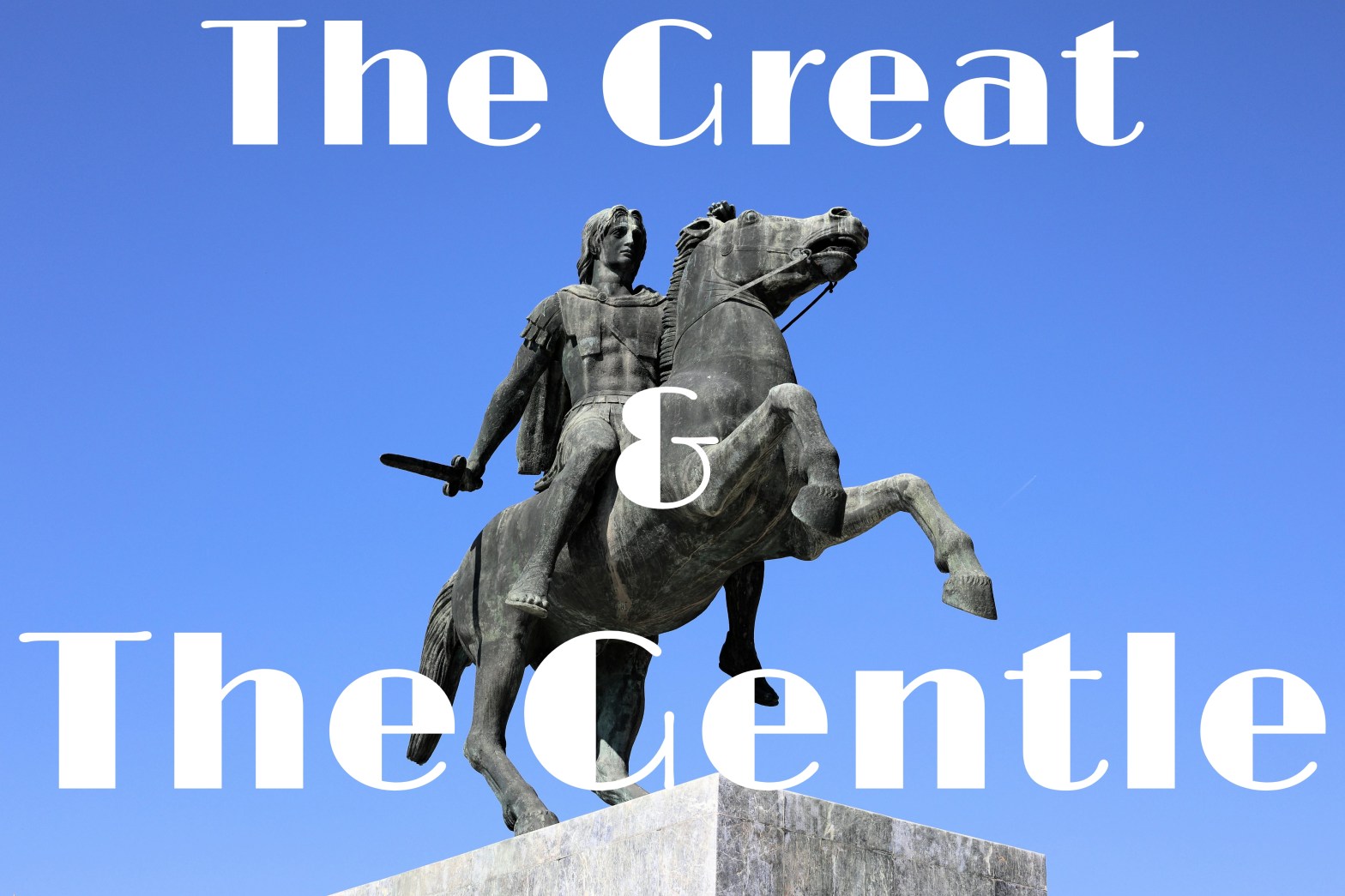
300 years before Christ, another young man entered the world. Not only did he spend some time in Egypt, but he also claimed to be the son of a god. Alexander the Great was a young Macedonian king who was bent on conjuring the known world. To the perisians, he was a pest, but to the conquered world, he was miracle. With some luck and a lot of military strategy, Alexander conquered the kingdom of Persia.
It did not last. Despite all his strength in battle, Alex took ill and would die in his early thirties. At his death, his kingdom became divided, and because of this divide, as well as other factors, the Romans were able to come in and make their own mark on the ancient world. He was a great leader whose kingdom fell apart immediately after his death.
Strangely enough, the life of Alexander is in contrast to the life of Jesus, yet they hold so many similarities. Christ was born into a people surrounded by a conquering nation. He claimed to be the Son of God on earth. He said he was there to free his people from the many things that bound them. His kingdom was being built on the earth and would not fall.
The Jewish nation had seen true conquers. They knew of Alexander the Great and his defeat of the Persian kingdom. If a man who claimed to be the son of god could do such things, how much greater would their Savior be. After the fall of Alexander’s kingdom, they watched the Maccabbes fight for the Jewish people with a might that would not be matched by their people again their time. If men who were not their Savior could do such works, how much greater would be their Savior.
Yet Jesus was not great in the world. He was gentle, humble, a quiet soul doing wonderous works. He taught gentleness and meekness of heart. He was a servant to his followers and taught that humility would be their way. His teachings did not raise him up to a leader who would conquer the Romans as these great leaders before him. They would raise him onto a cross where he would die.
Here’s the interesting part. Alexander made a great impact on the world of his day, but his Kingdom fell apart the moment he died. Christ made little impact on the world of his day, yet His kingdom has continued well beyond his day. Today, Christians fill the earth announcing the joy of the Saviors’ redemption. People are being made free from the bonds of sin right now, this very second, because of the Savior.
It was the gentle teachings of the Savior that ripple into our time. He still has active soldiers in his army fighting to spread his gentle message, while the soldiers of the Great ones have long sense passed to the grave. Great works will always be recorded in history, and we will always marvel over them. Gentle works are felt generations beyond, and we don’t have to marvel because we benefit from them.
People will always remember your great works, but it’s the gentle works that will impact their souls for generations to come.
The Self Made Obligations

This is very interesting. When I started writing this blog I went on and on about how, even though we love something it doesn’t mean it will always be easy. Then I started listing all the different careers that people might get in because they’re passionate about a subject and it hit me, love is action. When we love something we make an effort for that thing. It so wildly known and boasted about you’d think I’d already have that idea printed on my heart, but for some reason it really hit me just now.
Love isn’t easy, but it is. Love isn’t hard, but it is. It’s easy to love something, but we don’t truly love it if we aren’t willing to sacrifice. I’m been thinking about this in terms of writing. I love to write, it’s something I’ve enjoyed for a very long time, but over the years I’ve struggled with it sometimes becoming a chore. When I started this blog the whole point was to give myself an outlet to write all the time, but when I started to fall behind and not write as much as I should when it came to website relevance I lost a bit of the love. When you lose the love you act out of habit or routine. Routine gets boring and sometimes you realize all that routine isn’t what you wanted after all.
Obligation is the killer of love. To be obligated to do something often turns something into a chore. A requirement. Here’s the kicker. Obligation is a sign of true love. Obligation is the same as commitment, and commitment is the ultimate show of love. When I began this blog it was because I wanted to show myself, I was committed to writing more. When you get married thats a commitment to someone you love. Making a commitment is hard, but it’s made easier with love. When you commit to do something for someone or something you love it doesn’t seem so bad, unless you lose sight of the love.
I think I might be rambling at this point, but my main thought is how I had no idea what to write about this week. I started to get bogged down by what I should write about and I was losing a bit of the passion behind it. I debated if I should write if I wasn’t feeling like I had a topic, but then I realized I didn’t want to write because I had a topic or because I had an obligation. I just wanted to write. So I started writing about how I felt like I’d lost a bit of fire because of the obligation to write, and just gained more compassion for myself realizing I do love writing and this is something I don’t want to stop.
Barabbas: We are made Free
In the final hours of Christ’s life, He is taken before Pilot, who interviews Him intently. Upon discovering or deciding for himself that Jesus appeared innocent of wrong that permitted such involvement of the Romans, Pilot presented the people with an option. They could free Jesus of Nazareth or free Barabbas, a man known for his crimes against the people. Sure he knew what would be said, Pilot was shocked to hear “free Barabbas” shouted from below. He was so disturbed by this turn of events that Pilot insisted on washing his hands, clearing his own conscience.
I think the person most shocked to hear such a revelation was Barabbas himself. We have no way of truly knowing the man’s heart. Was he simply in the wrong place at the wrong time, or did he truly lead a life of crime? Did he have any remorse for his actions, or was he proud of his muddied reputation? One thing is for sure, he was not happy to be in the roman custody. It was likely he was meant to be the third in a row of robbers to be crucified that very day. In that very moment, he was pulled in front of the Roman leader looking out on all the people he had wronged and was certain his fate was set in stone. How could he possibly right his wrongs from the cross?
Then he hears his own name called out. The people wanted to free him. How could this be? Looking at Jesus, the Man meant to take his place all he would see was the humble Servant doing His Father’s bidding, and Barabbas would wonder how Jesus of all men, could be worse than himself. Despite everything, this Jesus, no matter what His reputation, had become Barabbas’ Savior. In that moment, the first was set free because of the death of Jesus.
In Barabbas, we see a type of each of us. We are all held prisoners to the wrongs we have done. Some of these can’t be undone. We can’t unbreak hearts that no longer trust us. We can’t bring joy back to someone we have stolen it from. We stand before the world, our crimes written in the hearts of those we’ve injured, emotionally, spiritually, and physically, and left to face the music. Beside us stands a Man, and despite our crimes so publicly placed, He takes those crimes upon Himself. It is He that you watch upon your cross, taking the punishment that was meant for you. Not just the physical punishment, but the emotional torment of knowing we can not recreate a bond we have broken.
This very sacrifice reconnects broken bonds. We can turn to those who have wronged us and look up together at the man on the cross, who took both our burdens. If He loved us both this much, why can’t we drop the chains of hate, sorrow, and fear? Why can’t we love with a hope we won’t be hurt again? We can. Because of Him, we can hope those who have wronged us will become better, and we can better ourselves. Because of Him, we can walk away from the cross of our sins and start again.
I don’t know what Barabbas did with his second chance. Perhaps he wound up right back in prison. Maybe he was killed by another, unhappy he had been released. I would like to think Barabbas grew curious of this Man who had become his Savior. He sought after the Man and came upon His followers. He learned of Christ and His mission and suddenly felt a closer connection to the redeeming power of Christ than any other, for he had been redeemed in this life. His chains had literally been removed, his punishment literally given to another. His Savior. The Savior. Jesus Christ.
 Jacob Gittins